
AI is changing how music is made, discovered, and consumed. Here we break down what AI means for producers, artists, and fans, with real case studies, practical advice, and a focus on intentional, human driven music like DOPE FIEND BEATS.
AI is no longer a side conversation in music. It is inside your DAW, your playlists, and even your voice. For producers, artists, and fans, this is not theory. It is real, right now.
Beyond the Algorithm: How AI Is Rewriting Music For Producers, Artists, And Fans
AI is everywhere. It is shaping the beats you scroll past, the playlists you let run, and the tools you open when you sit down to create.
For music producers, artists, and fans, this is not just another tech buzzword. We are in uncharted territory. The choices we make right now will decide whether AI turns music into fast food content or a new era of creative freedom.
This is not a “robots will replace us” horror story. It is a reality check from the perspective of intentional, artist driven music. The kind of sound that does not chase copy paste playlists, but aims to wake your ears up.
In this deep dive, we will break down how AI is changing:
- How music gets made
- How artists and producers get discovered
- How fans consume and value songs
- Where the real ethical and business risks live
Along the way, we will connect it back to the way DOPE FIEND BEATS operates: human first, concept heavy, and built for listeners who want more than background noise.
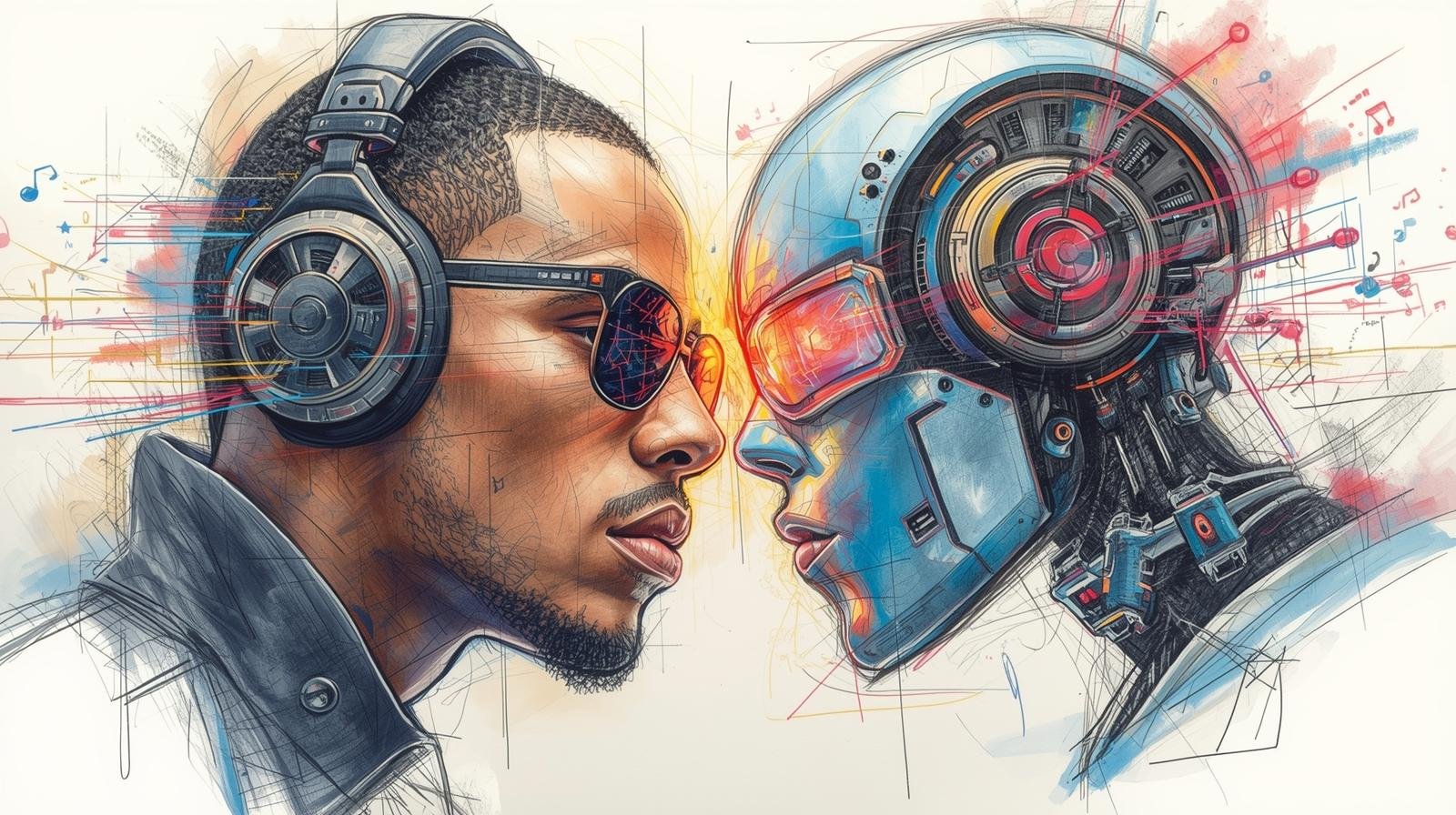
Table of Contents
- Why AI In Music Is Different From Any Tech Shift Before
- Case Study 1: The “Fake Drake” Era And The Power Of Viral AI
- Case Study 2: Grimes, Holly Herndon, And The Rise Of “Opt In” AI Voices
- Case Study 3: AI Beatmakers, Loops, And The New Producer Economy
- How AI Is Already Inside Your Workflow
- What This Means For Independent Producers And Artists
- What This Means For Fans Who Still Care About “Real” Music
- The Ethical And Legal Gray Zones You Cannot Ignore
- A Playbook For Using AI Without Losing Your Soul
- Where We Go From Here
1. Why AI In Music Is Different From Any Tech Shift Before
Every generation has a “this will ruin music” technology.
- Synths
- Drum machines
- Samplers
- Auto Tune
- Bedroom studios and affordable DAWs
Each time, the culture panicked. Then those same tools helped build new genres and classic records.
AI feels different for one simple reason.
It does not just change the sound. It changes who is making the sound, how fast they can make it, and how much the human fingerprint matters.
A synth still needs a musician.
AI can imitate a musician.
We are moving from tools that extend your hands to tools that can stand in for you. That is why so many creatives and fans feel uneasy.
At DOPE FIEND BEATS, the response is not to run from the future. It is to double down on intentional, human made projects like Sounds of Evolution Vol. I that are built as full journeys, not disposable content.
2. Case Study 1: The “Fake Drake” Era And The Power Of Viral AI
In 2023, a track called “Heart on My Sleeve” went viral. It sounded like Drake and The Weeknd on a full studio collab. It was actually an AI generated imitation from a mystery creator.
The track:
- Hit millions of streams before takedowns
- Sparked legal debates about voice rights and training data
- Proved that fans will play and share AI generated music if it fits the vibe
What this moment exposed:
Voice is now a plugin
With modern tools, anyone can clone a vocal style. Tone, ad libs, delivery patterns. Voice has become an instrument that can be simulated, not just recorded.
Labels protect catalogs, not culture
Major labels moved quickly to clamp down, not mainly to defend artistic integrity, but to protect IP and revenue streams.
Fans are conflicted, not blind
A lot of listeners said, “This kind of goes.” At the same time, many felt uneasy once they learned the artists were never in the room.
For producers and artists, this was a warning shot. If the internet can be flooded with believable clones, originality and trust become new currency.
That is where a curated, human driven catalog shines. When you listen to a track like “Concepts” or “Hangover” from Sounds of Evolution Vol. I, you are not just hearing a style. You are hearing choices, intent, and story that cannot be reverse engineered in a single prompt.
3. Case Study 2: Grimes, Holly Herndon, And The Rise Of “Opt In” AI Voices
Not every artist is fighting AI. Some are trying to shape how it gets used.
Grimes and AI collabs
Grimes publicly invited people to use an AI version of her voice and offered to split royalties for successful songs. The message was clear.
If you are going to clone me, do it with my consent and with a revenue share.
Holly Herndon and Holly+
Experimental artist Holly Herndon launched “Holly+,” an AI model of her own voice. Users can transform their vocals into her timbre under a framework she helped design.
These examples point toward a different way to work with AI:
- Artist approved voice models
- Clear compensation
- New types of collaborations where your “voice” becomes a licensed instrument
Instead of AI stealing identity, it becomes an extension of it.
For independent artists and producers, this is a glimpse of what could come next.
- You license your voice model to collaborators you trust
- You experiment with alternate “versions” of your artist identity across genres
- You build vocal textures and choirs from a core identity that still belongs to you
The difference between this and the “Fake Drake” wave is huge. One is consent and collaboration. The other is theft dressed up as innovation.
4. Case Study 3: AI Beatmakers, Loops, And The New Producer Economy
If you are a producer, AI is already in your lane.
- AI melody generators
- Full beat generation tools
- AI stem separation that can pull vocals, drums, and instruments from almost any mix
Typed prompts like “emotional trap beat with hard 808s at 140 bpm” can produce something that sounds usable. That puts pressure on producers who build only generic “type beats.”
Here is the real shift under the surface.
Low tier work is getting automated
Repetitive four bar loops, formulaic chord progressions, and copy paste drum patterns are the first to be replaced.
The ceiling rises for serious producers
If you already think in concepts and full albums, AI can help you:
- Prototype ideas faster
- Audition alternate drum grooves or harmonic palettes
- Mock up arrangements before committing to live instruments or detailed sound design
The middle gets squeezed
Clean but generic beats are now in direct competition with infinite AI output. On the other hand, a distinct sound that blends, for example, warm bass, sensual keys, and subtle jazz influences like DOPE FIEND BEATS is harder to counterfeit.
In other words, AI punishes sameness and rewards identity.
5. How AI Is Already Inside Your Workflow
You might say, “I do not use AI.” Reality check: you probably do.
- Smart mastering tools
- Noise reduction, de reverb, and vocal cleanup plugins
- Algorithmic recommendations on Spotify, YouTube, Apple Music, and TikTok
- Lyric ideas, chord assistants, and MIDI transforming plugins
What is new is that AI is now stepping into co creator territory.
- Generating instrumentals
- Cloning vocal styles
- Writing “good enough” lyrics for background music
- Personalizing listening sessions for every user
We are now past the point where AI is just under the hood. It is sitting in the session with you.
The real question is not “Am I using AI” but “How and why am I using it.”
6. What This Means For Independent Producers And Artists
For independent creatives, AI feels like both a cheat code and a threat. The truth sits somewhere in the middle.
Advantage 1: You can move like a small label
With the right tools, one person can now:
- Draft 10 cover ideas before sending the best direction to a designer
- Split stems and experiment with live versions or remixes
- Generate copy and concepts for marketing
- Test multiple sonic directions before locking in the one that feels the most like you
You can run more experiments in less time and reserve your real energy for what matters.
Advantage 2: You can refine your signature sound
AI is strong at mimicry. It is weak at lived experience.
If you use AI to explore harmonic ideas, unexpected chord changes, or textures you would not normally try, then rewrite and replay them until they feel like your own, the tool becomes a sketchbook.
You can hear that kind of intention in projects like Sounds of Evolution Vol. I. There is a cohesive mood across tracks such as “Precious”, “My Shoulder”, and “Cold & Empty” that does not feel like a prompt. It feels like a perspective.
Risk 1: Losing your identity in the noise
If you lean too hard on presets and templates, your music becomes background content. It might work for a few playlists, but it will be easy to replace.
Ask yourself:
If someone tried to clone my sound with AI, would my audience notice the difference in the details, stories, and feel?
Risk 2: Legal and ethical landmines
Independent does not mean invisible.
- Training data used by AI models is under legal scrutiny
- Using AI voices that imitate recognizable artists can get you removed or banned
- Some platforms may require AI disclosure tags
You need to think not just like an artist, but like your own legal department.
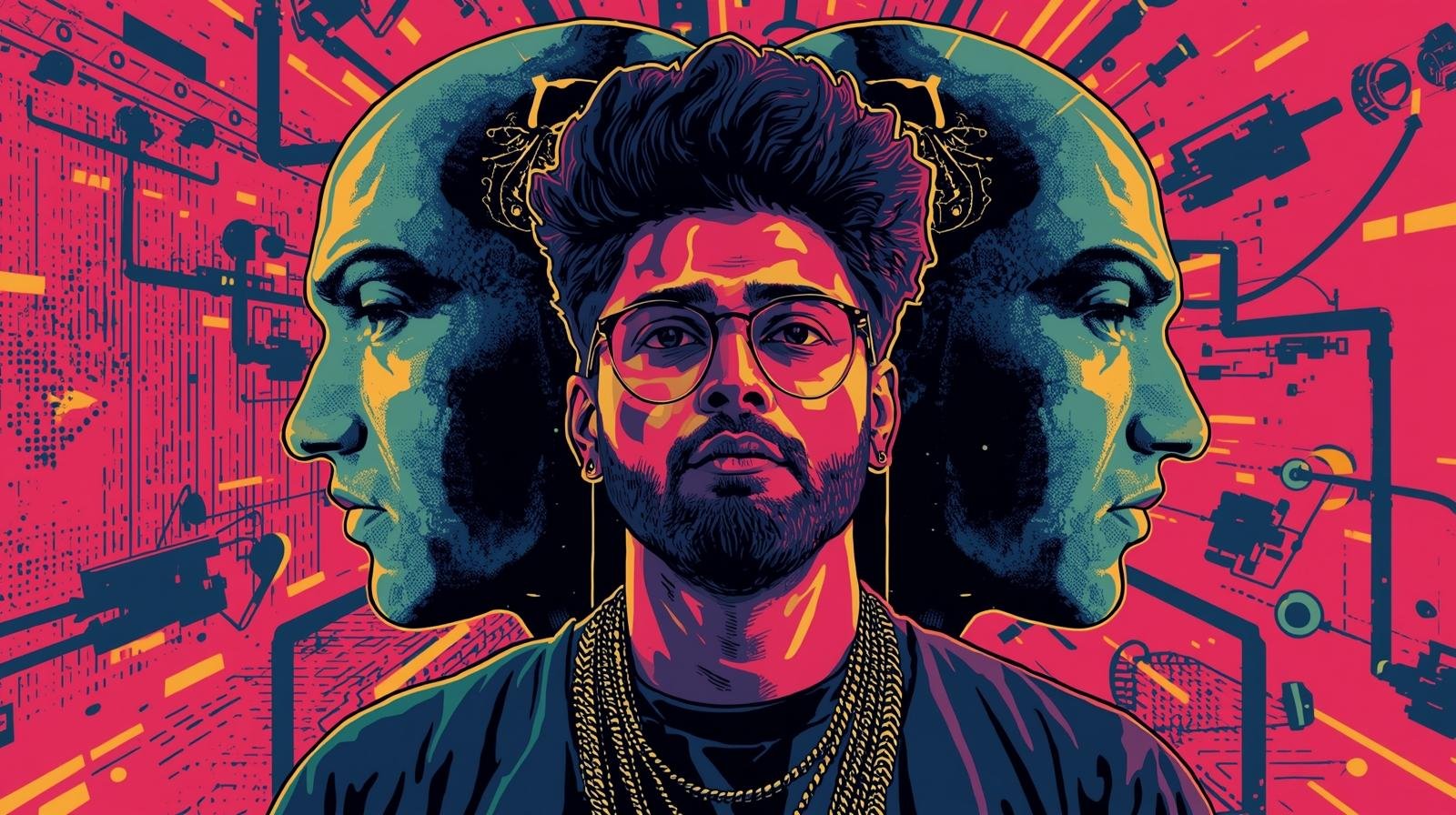
7. What This Means For Fans Who Still Care About “Real” Music
For fans, AI has already changed the listening landscape.
- Endless autoplay playlists
- Background scores that just “appear” in games, apps, and videos
- Viral audio trends that might be human, AI, or a blend of both
In this environment, certain values start to stand out.
Authenticity as a feature
Fans want to know who is behind the sound, what the story is, and why the music exists.
Curation over infinity
Endless music can become numbing. Curated catalogs hit different. A focused album like Sounds of Evolution Vol. I invites you into a world, not just a moment.
Direct connection
Hearing from the person who made the track, or reading a breakdown of their process, builds a connection that no AI playlist can match.
That is why artist driven brands like DOPE FIEND BEATS matter in this era. They cut through algorithm generated sameness with intentional, human centered music.
To go deeper on that philosophy, fans can tap into posts like Urban Jazz: Soul, Streets, and the Sound of DOPE FIEND BEATS, which already explore how history, streets, and soul blend into the catalog’s sound.
8. The Ethical And Legal Gray Zones You Cannot Ignore
The law is still catching up, but some lines are forming.
Voice rights
Using someone’s voice or a close clone without consent is increasingly treated like misusing their image or likeness. Expect tougher rules, more lawsuits, and more “opt in” voice marketplaces.
Training data and consent
Should models be allowed to train on entire catalogs of copyrighted music without permission and then generate new music in that style?
Courts across different regions are wrestling with this. However it lands, the result will impact:
- Royalty systems
- How sample culture evolves
- How open or restricted future AI music models become
Platform policies
Streaming services and platforms are already responding with their own rules.
- Labeling requirements for AI assisted tracks
- Restrictions on deepfake voices
- Stronger takedown processes
If your releases lean heavily on AI clones or unlicensed likenesses, you are not just pushing artistic boundaries. You are risking how and where your music can live.
9. A Playbook For Using AI Without Losing Your Soul
AI is not leaving the studio. So the real move is to decide how to use it with intention.
Here is a practical playbook.
Use AI as a sketchbook, not a ghostwriter
Let AI help you:
- Draft chords, rhythms, and textures
- Build rough skeletons you later recompose or replay
- Explore ideas you can then take much deeper as a human
Then put your hands, your ears, and your story back in charge.
Build a recognizable sonic identity
Invest in things AI cannot easily fake:
- Specific drum tones and swing
- Harmony choices rooted in your taste, not presets
- Personal themes, stories, and emotional through lines
- Surprising blends of genres, like your Urban Jazz, Trap, and alt R&B infusions
A track like “Wild & Free” or “Love U So” is not just about structure. It is about feeling. That is your moat.
Be transparent where it counts
You do not have to list every plugin. But:
- If you use an AI version of someone else’s voice, get clear consent and share the story
- If you release fully AI generated projects, let fans know what they are hearing
Transparency builds long term trust with listeners who seek out music the way some people seek out films, not just clips.
Learn the business side of AI
Watch for:
- Royalty schemes that include AI assisted works
- Voice licensing platforms
- New publishing structures for artists whose catalogs help train models
If you understand these shifts early, you can build strategies instead of reacting to disasters.
Embrace “slow music” in a “fast content” world
AI can pump out infinite tracks.
You do not have to.
Focus on fewer, deeper, more intentional releases.
- Concept albums and cohesive EPs
- Tracks designed for replay and reflection, not just virality
- Listening experiences that reward people who sit with the music, the way you designed Sounds of Evolution Vol. I as a full journey rather than a random playlist
Let AI handle the grunt work. Keep the soul work for yourself.
10. Where We Go From Here
AI will not end music. It will end some lazy habits.
- The belief that clean production alone is enough
- The comfort of chasing whatever is trending
- The mindset that quantity beats quality
For producers, artists, and fans who still see music as culture and not just content, this era is a test and an opportunity.
The test:
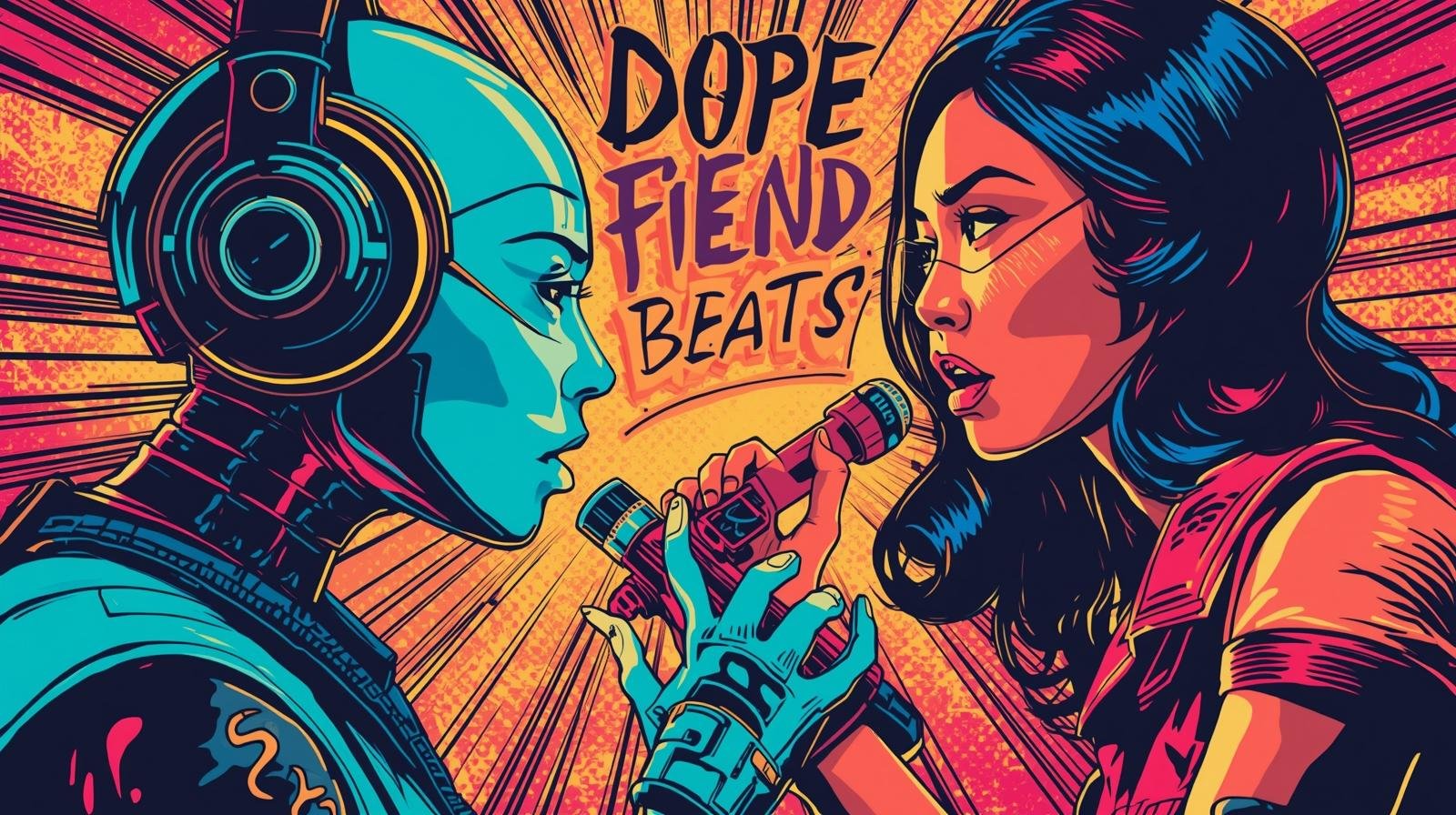
Can you stay human, intentional, and original while surrounded by tools designed to make you sound like everyone else?
The opportunity:
You can build work that stands out precisely because it coexists with AI without becoming a product of it.
Projects like Sounds of Evolution Vol. I, deep dives into style and history like Urban Jazz: Soul, Streets, and the Sound of DOPE FIEND BEATS, and spotlights like SPOTLIGHT: Waving Flags show another path.
A future where technology gets louder, but the human behind the boards stays louder still.
Pimp AI. Do not let AI pimp you.
Further Reading
- Overview of AI in music and legal challenges:
IFPI and AI in music commentary - Coverage of the fake Drake “Heart on My Sleeve” case:
Billboard - Grimes’ stance on AI collabs and revenue sharing:
Grimes AI voice initiative reported on The Verge - Holly Herndon and Holly+ project:
Holly Herndon’s Holly+ - General AI and music law explainer (training data, copyright):
Electronic Frontier Foundation on AI and copyright
Further Reading And Listening On AI In Music
- Holly+ by Holly Herndon
- Coverage of AI voice cloning and fake Drake on Billboard
- AI and copyright explainers by the Electronic Frontier Foundation


